Art Deco Still Popular Design Style Today Stephen Leon
Nosotros recently discussed the importance and characteristics of Art Deco style. Living its golden years in the period between the two biggest global conflicts Art Deco was one of the most elegant and glamorous styles in modern art history. Between the 1920s and 1940s Art Deco was embraced by many artists regardless of the field they were working in, from architecture and interior blueprint to painting, sculpture, ceramics, style and jewelry. In the interwar period, Art Deco patterns were a synonym for modernist ideas of progress, optimistic celebrations of life and luxurious lifestyle of a generation of youth who was coming of age subsequently the war. Fine art Deco aesthetics and heritage continues to live today, and the cornball trends in today's society continue to revive some of the features of this glorious style of the past. In the spirit of remembrance, we are today revisiting the works of ten virtually influential Art Deco artists and talking about the mode they have changed the world of decoration.
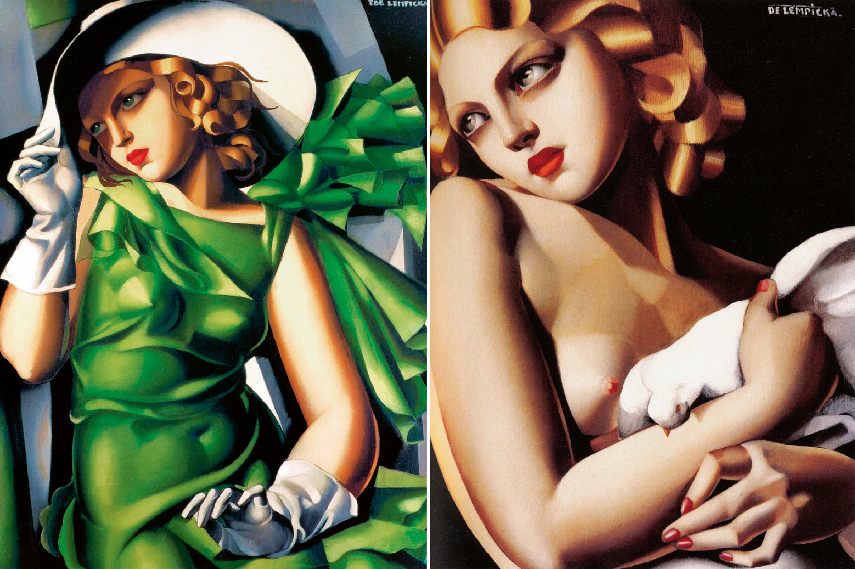
Tamara de Lempicka - The Baroness with a Brush
Tamara de Lempicka is perchance one of the most admired and most recognizable Fine art Deco artists. Born in Poland in 1898 and settling in Paris after the Russian revolution, Lempicka became engaged in the maverick lifestyle of 1920s Parisian socialites, painting portraits of many prominent figures including the exiled dignity, which brought the painter critical acclaim, fame, and considerable wealth. Her artistry is a perfect representation of her lifestyle of glamour. Drawing inspiration from the popular painting movements of the fourth dimension like cubism, for example, Tamara de Lempicka adult her unique arroyo, which was more subtle than the original cubist expression, elegant, precise and clean. The bold bright colors and angular fashion that came to boss her work, as the primary features of Fine art Deco style, are among the master reasons why Tamara de Lempicka'due south oeuvre is seen equally the best representative of Art Deco painting. She was one of the most prominent portrait painters in her generation, favored by the aristocracy audience and her works are even today greeted with enthusiasm.
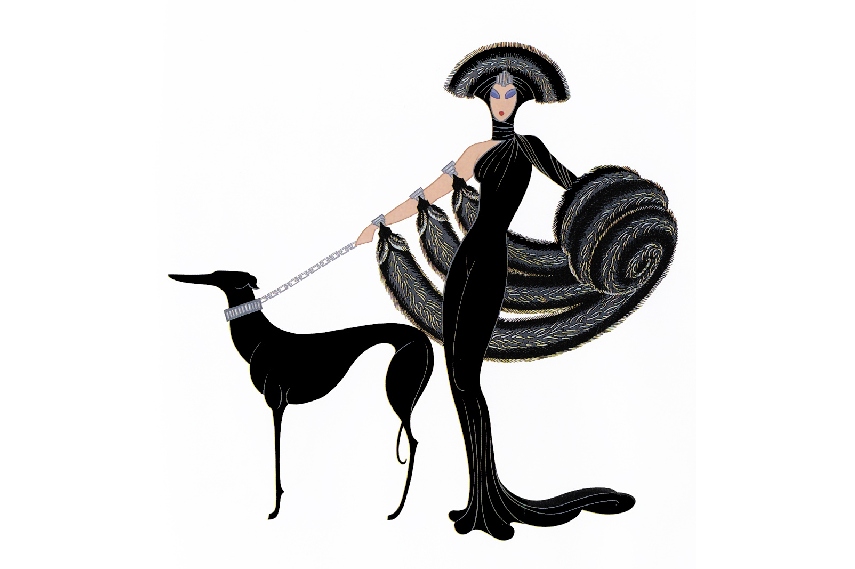
Erté - Improvident Costume Designer
Romain de Tirtoff known by his alias Erté is probably one of the best known Art Deco designers. Born in Saint petersburg in 1892, he became ane of the most influential fashion designers and illustrators in Paris in 1920'due south. Erté became widely recognized for his sophisticated and highly stylized mode illustrations. For two decades, between 1915 and 1937, his works were on the covers of Harper'due south Bazaar and appearing in other leading fashion magazines like Vogue and Cosmopolitan. Throughout this period, he likewise collaborated with Paul Poiret, some other famous designer from Art Deco gilded years and except his illustrations he did numerous designs for opera and theater costumes and stage sets. His designs and illustrations are oft described every bit exotic and romantic, extravagant in their appearance. In his long career, spanning approximately eight decades, this Art Deco designer used to work in the other fields too, from jewelry design to interior decor and sculpture. For a while, he also worked with Hollywood product companies, designing sets and costumes for some memorable films similar Ben-Hur.
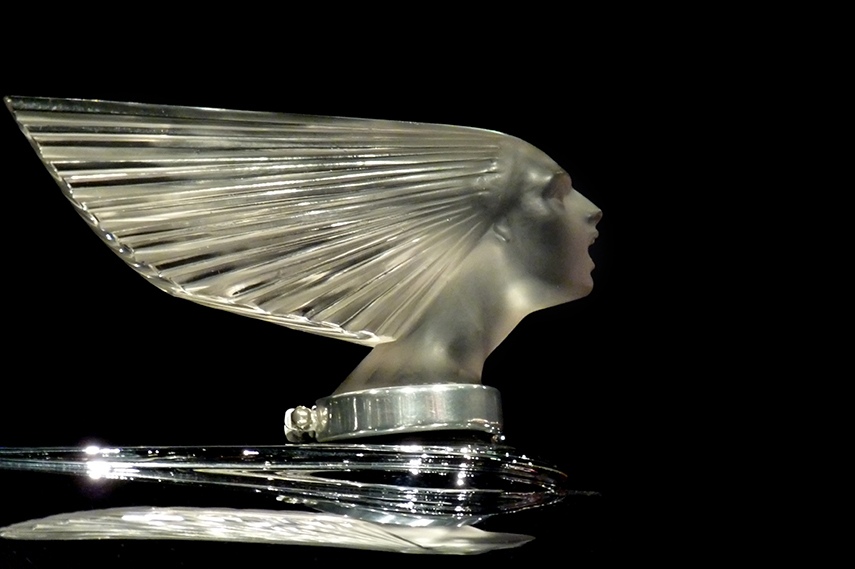
René Lalique - A Master Jeweler
René Jules Lalique is probably the world'south nigh famous glass art designer whose legacy is still strong today and whose pieces are favored by the collectors. Born in 1860 in Paris, Lalique became i of the most praised Art Nouveau jewelry designers working for the leading French jewelers similar Cartier and Boucheron. In 1920s René Lalique abandoned his Art Nouveau orientation toward natural, free-flowing forms and adopted the tendencies of the emerging Art Deco art way. His pieces became more streamlined and he began experimenting with new materials from metal to enamel. However, glass pieces remained his favorite, except they gained new prismatic qualities. In the Fine art Deco period, he dominated the jewelry and glass market, and his success tin can likewise be attributed to his lost wax method of drinking glass casting which allowed him to create multiples of the same pattern. Some of his awe-inspiring works in Fine art Deco style, except his smaller perfume bottles, pieces of jewelry, and motorcar ornaments, are the walls of lighted drinking glass and glass columns for ocean liner Normandie and his stylized glass fountain made for the get-go Fine art Deco exposition.
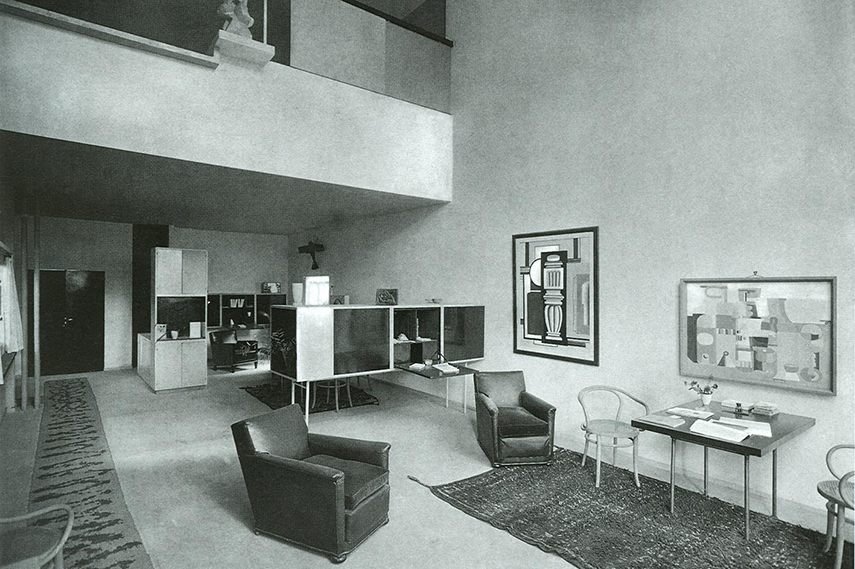
Le Corbusier – The Man Backside the Art Deco Term
Although he was one of the loudest opponents of decorative arts, the builder Charles-Édouard Jeanneret-Gris, better known as Le Corbusier became inseparable from the Art Deco context over the years. The first utilise of the term Art Deco is ofttimes attributed to this man, even though the term officially entered the art history vocabulary in the sixties. In 1925, at the inaugural Art Deco exhibition, Le Corbusier'due south pavilion stood in opposition to the extravagant decorative motifs typical for the new fashion. Already an idol in the history of architecture, Le Corbusier favored standardized housing, purist aesthetics, strict and rational designs. Closer to the Bauhaus ideas Le Corbusier'southward architectural works were anti-decorative and hostile towards the luxurious, expensive and exotic materials promoted by Art Deco artists. However, due to Art Deco's shut relation to modernist aesthetics and Le Corbusier's early works every bit a decorator, his name became essential in any talk about the history of Art Deco way.
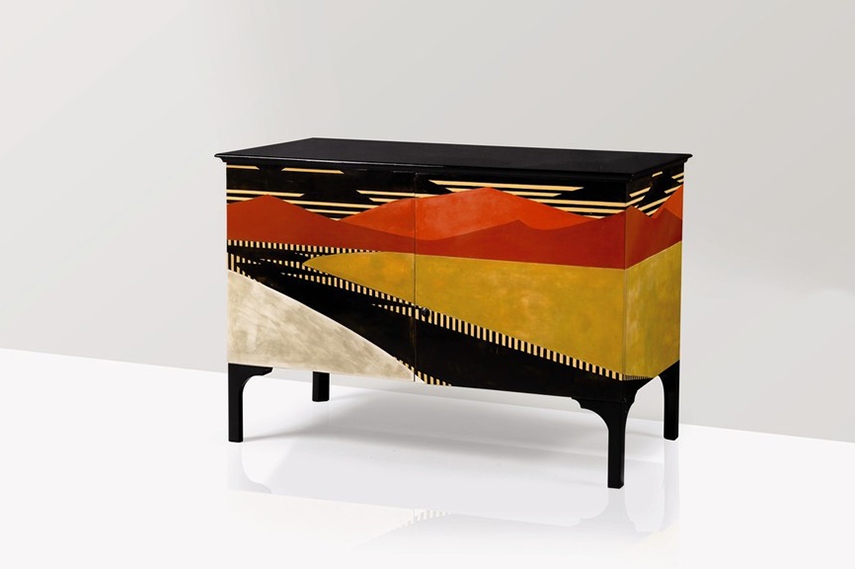
Jean Dunand – The Greatest Lacquer Artist
French artist Jean Dunand was certainly the most important lacquer artist of the Art Deco menstruum. During his formative years, he was generally interested in sculpture and copper work. After 1910, he began his lacquer experiments every bit the apprentice of Japanese artist Seizo Sugawara. As a fast learner, Dunand quickly mastered this difficult and time-consuming technique along with coquille d'oeuf technique which allowed him to create amazing patterns by embedding eggshells in his lacquer layers. At first, his lacquer works were more often than not inspired by Japanese cultural heritage and naturalistic motifs typical for Art Nouveau designs, but he after abandoned these motifs for more abstract and purer forms influenced past Cubism and African fine art. A prolific Art Deco designer, Dunand applied lacquer on a variety of objects and surfaces from vases and jewelry to panels, furniture, and fifty-fifty portraits. On many occasions, he worked with other prominent article of furniture designers of the Art Deco period and later on a whole century, his furniture and decorative works are still highly valued by fine art collectors.
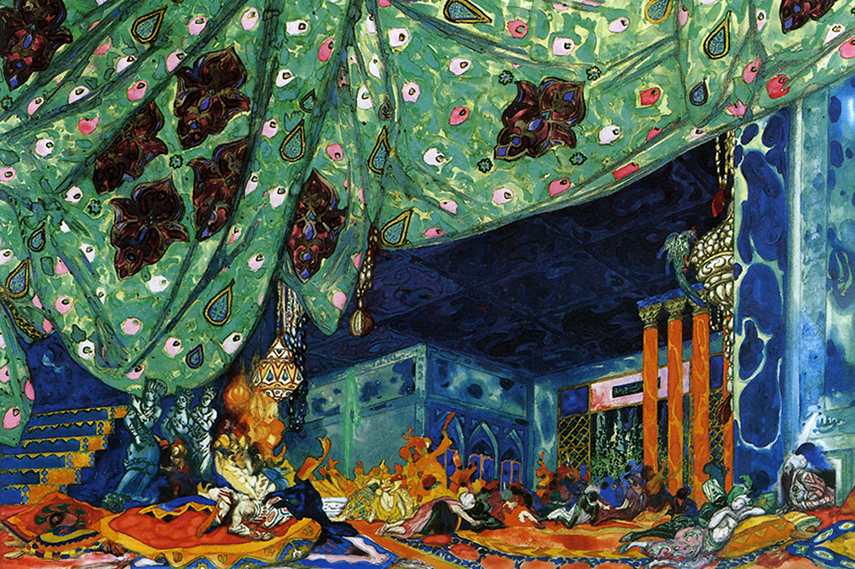
Léon Bakst - Russian Leading Costume Designer
Fine art Deco is primarily defined by its eclectic selection of styles. The Ballets Russes as the commencement international performing company which featured stage and costume designs by the prominent artists was for a long time 1 of the master sources of inspiration for Fine art Deco designers. Russian creative person Léon Bakst who was among the well-nigh influential designers for the Sergei Diaghilev'south Ballets Russes Company betwixt 1909 and 1921 influenced the formation of the early Art Deco aesthetics. He was a member of the Mir Iskusstva group, which became famous in Paris in the years of the Ballets Russes craze. This group of artists revolutionized theatrical pattern at the beginning of the century working not only on costumes and on decor but also influencing the visual fashion of the dance. Vibrant and heady, full of exotic imagery and motifs, the costume and set up designs by Léon Bakst embodied all those essential elements Art Deco artists longed for. His use of harmonious coloring, rich decorations, and bold compositions influenced a new generation of Art Deco designers making a keen impact on the farther developments of this decorative mode.
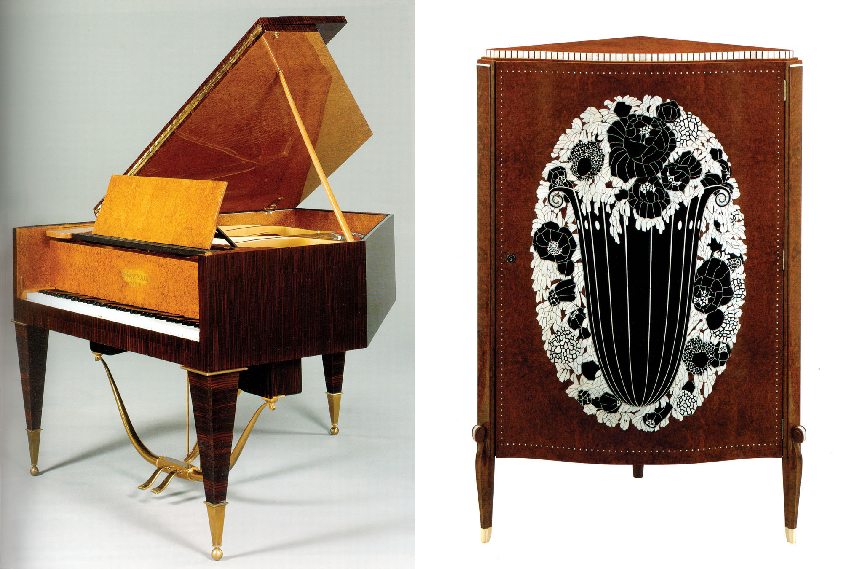
Émile-Jacques Ruhlmann – Genius Furniture Designer
Among the pioneers and the loudest promoters of Fine art Deco style is French piece of furniture and interior designer Émile-Jacques Ruhlmann. Ruhlmann strongly believed that the salvation of fine art depended on the elites and unlike Le Corbusier who promoted strictness and purism, the designs of Ruhlmann perfectly embodied that spectacular and luxurious spirit of the age. Although he was restrictive in the use of ornamentation, he fashioned his furniture pieces and interior decorations of the finest and expensive materials like exotic woods, ivory, lacquer, and precious metals. Émile-Jacques Ruhlmann was certainly the favorite artist of the post-war bourgeois classes eager to bear witness their wealth and sense of taste. Perhaps the greatest achievement in Ruhlmann's work was his ability to introduce the aristocratic, classical fashion of the by to the modern context. Amid the high-style Art Deco artists, Ruhlmann is certainly the forerunner who helped ascertain the movement and who however inspires designers today.
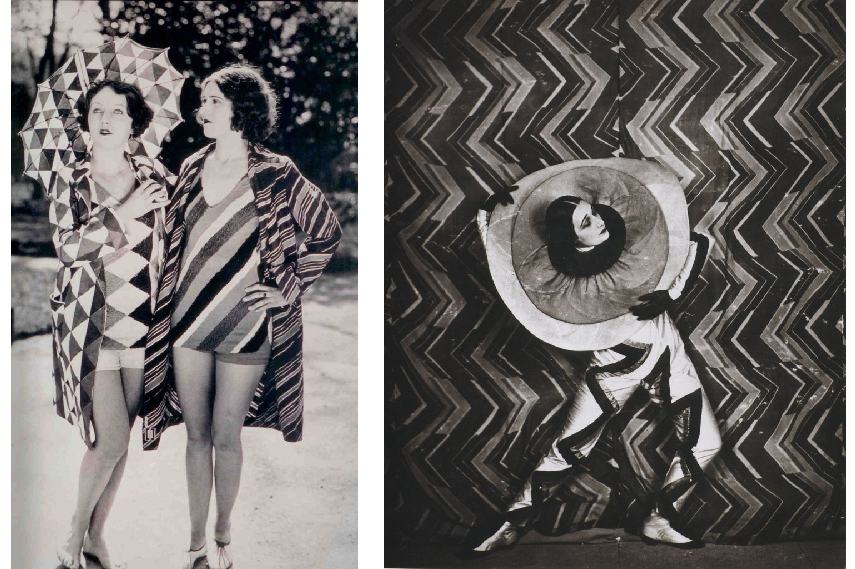
Sonia Delaunay - Abstruse Mode Pioneer
Russian-born French artist Sonia Delaunay is among those Art Deco designers who even today strongly influence manner trends. Inspired by Cubism, Fauvism and working closely with Surrealist poetry school and Dada artists, she was the first designer to introduce abstract inspiration into the world of manner. The concept of geometric blueprint was ultimately new and fashionable during the decade betwixt 1920 and 1930, and some of her best pieces come up from this period. Her bold combinations of colors and textiles brought her the championship of the designer of mod fashions during the 1925 Expo and she became famous for her patchwork dresses, which were experiments in simultanéisme, an odd and modernistic mix of dissimilar colors and materials. In the 1920s her collaboration with Dadaist artists resulted in the cosmos of her "poem dresses" where geometric blocks of colors were placed next to the lines of poetry. As one of the nigh important Art Deco artists, Sonia Delaunay also made imaginative waistcoats for Tristan Tzara, Louis Aragon, Rene Crevel and other Surrealist poets and even today her abstruse designs influence high-stop fashion collections.
Georges Lepape – Oriental Inspiration
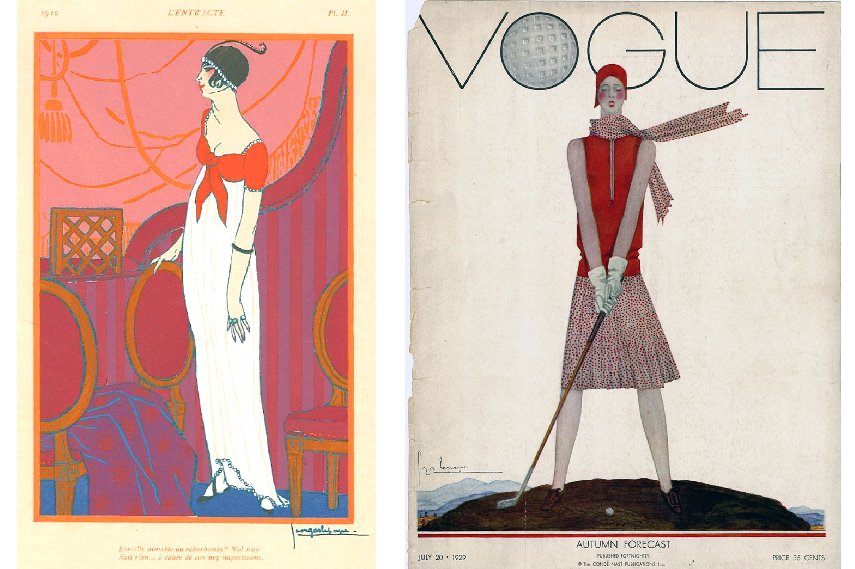
Another famous Art Deco designer is Georges Lepape. He first entered the fine art world working every bit an illustrator for Paul Poiret and later became 1 of the most famous fashion magazine illustrators. Until the mid-1930'southward he was the star illustrator at Vogue magazine. Georges Lepape's fine art is mainly characterized past his witty portraits, curvilinear style, elegance which dominated his prints, posters illustrations, and catalogues. Throughout his piece of work, just like many other Art Deco artists, Georges Lepape was influenced by Orientalism, Farsi miniatures and the popular theater aesthetics of the Ballet Russes. Representative of his style are his illustrations depicting thin female figures wearing turbans and possibly the best qualities of his subjects are their carefree attitudes, cocky-confident and independent looks. Subsequently 1938, Lepape mostly produced volume illustrations abandoning the world of manner.
Jean Després – Celebration of the Industrial Era
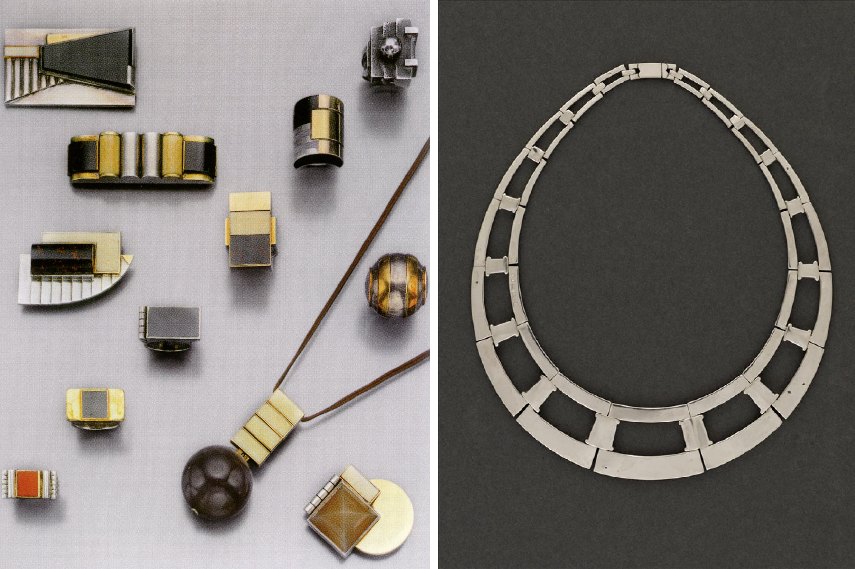
The Art Deco commemoration of the technological developments and industrialization is perchance all-time embodied in the work of Jean Després. In the years before World War II, young Després was working as the apprentice at a Paris metallic workshop, grooming to continue the family'due south small jewelry business. His years in Paris were marked by his friendship with the avant-garde artists Modigliani, de Chirico, and Braque. At the offset of World State of war I Després started working on an airplane, industrial design and both of these elements, the Cubist inspiration and industrial experience influenced his later on jewelry works. After the war, Jean Després became famous for his innovative and conceptual geometric designs. Some of the pieces he created were based on the actual machine parts. His other famous works include jewelry which incorporates miniature cubist paintings and neo-classical pieces which are an odd combination of metal and ceramics. Apart from jewelry, he as well designed objects similar tea and coffee services, flatware, trays, pitchers and serving pieces amongst others. Until this day, he remains ane of the jewelers favored by the collectors.


As i of the most pop decorative styles in history, Art Deco has lived up to many of its revivals and imitations. The volume Art Deco, written by the German-based art historian Norbert Wolf, traces the origins of the movement in the menstruum betwixt the two World Wars, focusing on the pioneering creations, characteristics of this widely recognizable style, most significant artists, and too social and political contextualization of the movement. With hundreds of illustrations, Norbert Wolf'southward volume brings the finest examples of Art Deco paintings, architecture, interiors, jewelry, crafts, furniture, and fashion. The volume provides a comprehensive insight into the evolution of the movement, bringing together celebrated and gimmicky examples of Art Deco style and the extravagant spirit it celebrates.
Featured images: Georges Lepape - L'Entracte, detail; Erté - The Nile. All images used for illustrative purposes just.
Source: https://www.widewalls.ch/magazine/art-deco-artists

Enregistrer un commentaire for "Art Deco Still Popular Design Style Today Stephen Leon"